After 40+ Corporate Events and $45K in Mistakes, Why I Recommend Escapology Escape Rooms for Team Building
After four years and 40+ corporate team building events, here's my conclusion: if the goal is forcing real collaboration, a professionally-designed escape room beats the alternatives almost every time.
I didn't arrive at that opinion through careful research or a tidy cost-benefit analysis. I arrived at it by doing the wrong things for three years—and paying for the privilege. It took me 3 years and roughly $45,000 in wasted budget to understand that team building effectiveness has less to do with how impressive the venue looks and everything to do with how much the activity forces people to work together.
For context: I'm the person who plans corporate events for a 300-person software company. I've planned team building for groups of 8 to 60 people across five U.S. cities. I've personally made—and documented—12 significant mistakes, totaling roughly $45,000 in wasted budget. Now I maintain our team's vendor checklist so nobody else repeats my errors.
The Mistakes That Changed My Approach
I don't want to overstate the failures. They weren't disasters; they were expensive lessons.
The amusement park trip (April 2022). I planned an outing to Tibidabo, the Barcelona amusement park, for a 28-person product team merging from two offices. On paper it was perfect: rides, good weather, food. In practice, the team split into existing cliques within the first 20 minutes and didn't cross groups for the rest of the day. We spent roughly $900 on tickets plus transportation and meals. The team had a fine time. The actual goal—improving cross-team communication—got zero traction. Fun, but not team building.
The rowing machines (September 2023). This one's on me. I convinced leadership to buy two $2,400 rowing machines for the office, based on the theory that shared physical activity builds workplace bonds. The machines got consistent use for about six weeks, then became expensive coat racks. I am not qualified to evaluate fitness equipment, and I won't pretend otherwise—if you need a rowing machine review, there are better people to ask. That's exactly the problem: I had been making decisions outside my lane.
The video game night (January 2024). I did the research. I looked into what the most popular video game was, read reviews, polled the team, set up a tournament. The night was fun for the gamers. The other two-thirds of the team checked out completely, and the people who played got competitive in ways that weren't constructive.
Look, all three options had something in common: they let people do their own thing side by side. None required interdependence. That's the corner I kept painting myself into.
Why an Escape Room Fixes the Interdependence Problem
An escape room is the opposite of parallel play. Nobody wins alone. The design physically forces communication: the quiet analyst in the corner suddenly spots a clue someone else needs. The intern sees something the director missed. The room punishes solo strategies and rewards people actually talking to each other. That's exactly what most managers say they want from a team building day.
Why does this matter? Because the escape room industry has built entire facilities around this dynamic. According to Room Escape Artist's annual industry census, there are over 2,300 escape room facilities in the U.S. as of 2024. The numbers aren't the point though—design is.
When I started evaluating escape rooms for our client events, I started with Escapology because of a specific National Harbor experience. I did a site check at the Escapology National Harbor location in October 2024. The risk calculus was straightforward: the venue quoted about $400 more than a cheaper escape room nearby. The upside was better rooms, better facilitators, and a proven track record with corporate groups. The worst case with the cheaper place was a mediocre event for a team that had traveled across town. I kept asking myself: is saving $400 worth risking the entire event? It wasn't. We booked National Harbor, and the event ran flawlessly.
That site visit also changed how I read venue photos. I had nearly written off Escapology's Tyler, Texas location because the Escapology Escape Rooms Tyler photos on their website looked generic—standard blacklight and cardboard aesthetic. Then I visited in person. The actual set design was significantly better: detailed props, solid construction, thoughtful lighting. The photos undersold the experience. That reverse experience—seeing photos understate a venue instead of overselling it—flipped my default assumption. Now I assume venue photos are unreliable in both directions. The only way to evaluate a room is to walk it.
The Checklist I Use Before Booking Any Venue
Since implementing my pre-booking checklist 18 months ago, we've caught 47 potential issues across 16 event bookings. That's 47 problems that would have surfaced during the event otherwise.
- Which specific rooms will we get? Rooms vary in difficulty, physical intensity, and puzzle style. A good vendor should recommend rooms that fit your group rather than saying "all rooms work." Escapology's corporate staff walked us through options and matched them to our group profile.
- What's the facilitator-to-group ratio? I've worked with venues where one facilitator was juggling six rooms at once. A serious corporate escape room has a dedicated facilitator, and that person is the difference between a puzzle and a team building experience.
- How much of the booked time is actual game time? One venue I used had a 15-minute briefing that cut into the 60-minute escape. We got 45 minutes of play. The vendor didn't advertise this. Ask explicitly.
- Can everyone in the group actually play? Will a dominant personality steamroll the experience while others watch? That's fine when the goal is entertainment. It's not fine when the goal is team building.
The Limits of This Recommendation
I'm not going to pretend an escape room is right for every situation—that kind of overclaiming is exactly what I've learned to avoid.
Large groups (60+ people). Split a 100-person team into eight rooms and they all have different experiences. It's fun, but it's not a shared team moment. A venue with a large open space might serve you better.
Teams in active conflict. If interpersonal issues are serious, a tense escape room can amplify them. Facilitated conflict resolution should come first. A good vendor will tell you this—Escapology's staff did when I asked directly.
Burnout recovery. If the team's real need is rest, don't book any activity with a timer. The healthiest choice might be a quiet venue with no agenda at all.
The same boundary logic applies to vendors. When I asked Escapology's corporate team which room design was hardest for them, they didn't say "we're great at everything." They told me what they're built for—immersive, narrative-driven escape rooms for corporate groups—and pointed me to a different room style when their strength wasn't a match. That honesty earned my trust for every other recommendation.
I'd rather work with a specialist who knows their limits than a generalist who overpromises. Same goes for my own decisions. I should never be the person recommending office gym equipment, and I shouldn't plan team building around a video game popularity contest. When I stay in my lane—team building activities—the outcomes get better.
Four years ago, I would have recommended the amusement park. Three years ago, the rowing machines. Two years ago, the video game tournament. Now I recommend a well-designed escape room from a vendor with a proven corporate track record. And if you're planning your own event, the advice is the same advice I wish someone had given me: pick an activity that forces your team to need each other for an hour. See what happens.
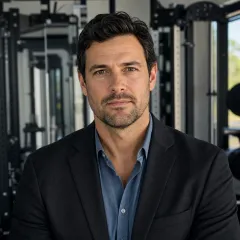
Marcus Feldman
Marcus Feldman is a commercial strength-equipment analyst covering selectorized machines, plate-loaded stations, Smith machines, functional trainers, power racks, benches, barbells, dumbbells, and cable systems. He applies ISO 20957-1 and ISO 20957-2 while comparing rated loads, stability, frame deflection, pulley ratios, cable travel, adjustment increments, guarding, entrapment points, fastener retention, and fatigue cycles. His guides help gym operators, coaches, facility planners, and procurement teams evaluate biomechanics, user capacity, floor layout, maintenance access, durability, and lifecycle value.